Source pull down sprayer kitchen faucet for Home Hotel Villa
Compare 30 pull down sprayer kitchen faucet options from verified manufacturers in China. Buyers can evaluate ceramic cartridge models with single or dual handles, stainless steel or brass bodies, and various finishes like brushed or chrome for residential and commercial projects.
Key considerations
Products List








Comprehensive Sourcing Guide
Strategic Sourcing Guide for Pull-Down Sprayer Kitchen Faucets
Understanding Technical Specifications and Core Functionality
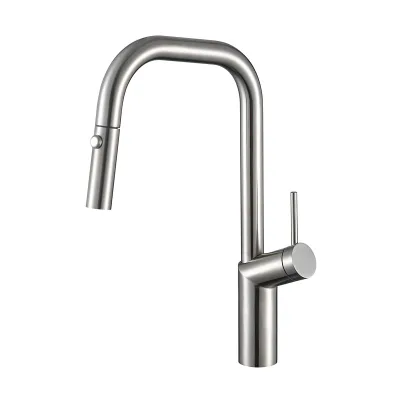
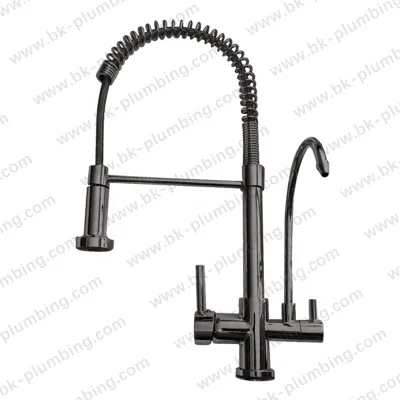
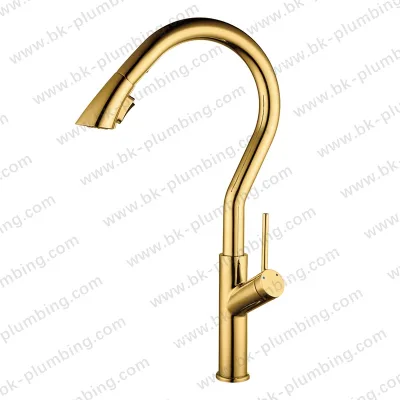
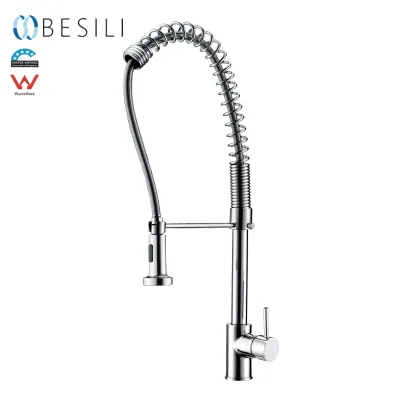
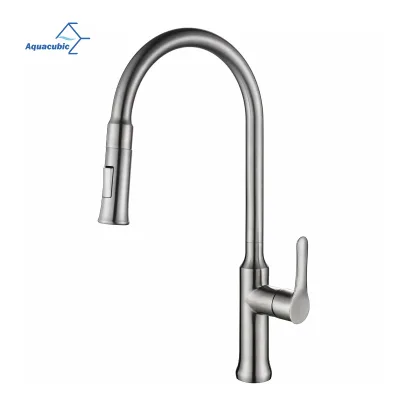
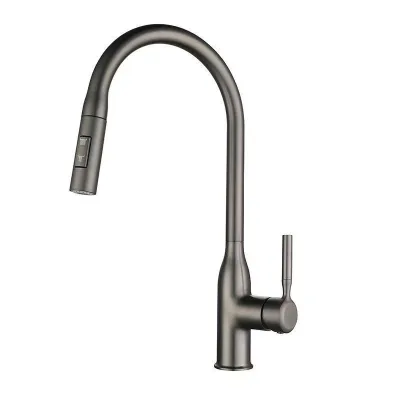
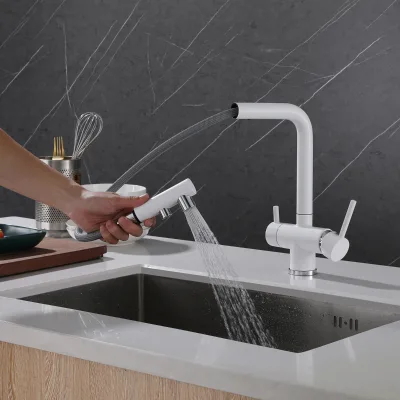
When sourcing pull-down sprayer kitchen faucets, the primary focus must be on the mechanical architecture that defines the product's utility. The core mechanism involves a flexible hose housed within the faucet body, allowing the spray head to extend from the spout for rinsing dishes or cleaning the sink basin. In the current market, the observed product attributes indicate a strong prevalence of single-handle designs, which offer intuitive control over both water volume and temperature through a single lever. This design is particularly noted for its "Modern" and "Contemporary" styling, aligning with current kitchen renovation trends.
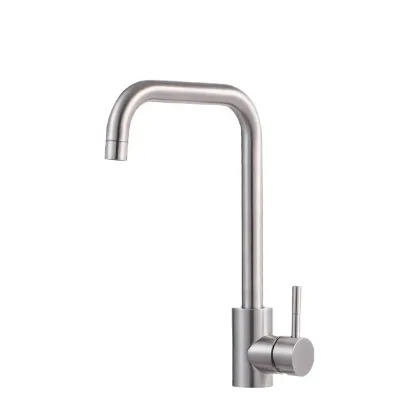
The valve core material is a critical determinant of longevity and drip resistance. The supplied data highlights the use of ceramic cartridge technology, specifically citing a 35mm ceramic cartridge in certain models. Ceramic discs are preferred in B2B procurement because they offer superior wear resistance compared to rubber washers, ensuring a long service life with minimal maintenance. The body material is equally significant; the observed inventory includes both Stainless Steel (specifically 304 Satianlsee Steel) and Brass constructions. Stainless steel models often feature a brushed finish, while brass models may be chromed. The choice between these materials depends on the specific aesthetic requirements and the corrosive environment of the intended application, such as high-humidity commercial kitchens versus residential settings.
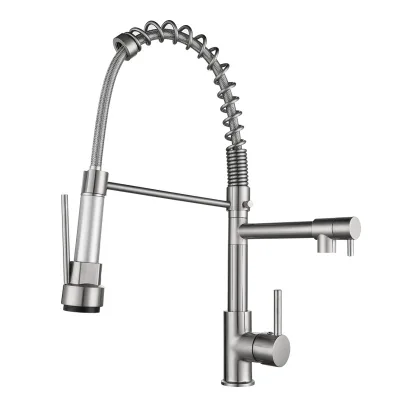
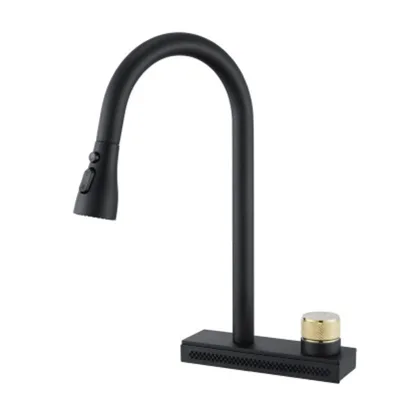
The spray functionality itself is a key differentiator. The product listings confirm a "Pull Down" spray type, with some models also featuring "Pull Out" capabilities. This distinction often relates to the hose length and the range of motion required. For commercial applications like hotels, villas, and office buildings, the ability to reach all corners of a large sink is essential. The flow rate is another technical parameter that varies, with observed ranges including 1.0-1.9 gallons per minute, 2.0-2.9 gallons per minute, and rates of 3.0 gallons per minute and above. Procurement teams must verify these rates against local water conservation regulations, as higher flow rates may be restricted in certain jurisdictions despite the convenience they offer.
Compliance and Certification Verification
Navigating the regulatory landscape is a non-negotiable aspect of international procurement. The supply chain data reveals a diverse array of certifications that indicate varying levels of compliance with international standards. High-confidence facts confirm the presence of Watermark and WELS (Water Efficiency Labelling and Standards) certifications, which are critical for markets in Australia and New Zealand. These certifications ensure that the faucet meets specific water efficiency and safety requirements.
Furthermore, the observed product attributes list CE, ACS, BSCI, KTW, and ISO9001 certifications. The CE mark indicates conformity with health, safety, and environmental protection standards for products sold within the European Economic Area. ACS (Association Sanitaire) is specific to France and certifies that the materials are safe for drinking water contact. KTW is a German standard for materials in contact with drinking water, ensuring low leaching of harmful substances. ISO9001 confirms that the manufacturer has a certified quality management system in place.
Buyers must exercise caution when interpreting certification claims. While the data lists these certifications, they are not universally present on every single unit or model. For instance, one model is listed with Watermark+WELS, while another lists CE, ACS, BSCI, KTW, and ISO9001. It is imperative for the buyer to request valid, current certificates for the specific model number being ordered, such as HD30856 or FF6363B, rather than relying on general brand claims. Additionally, while "Reach" and "RoHS" are mentioned in background notes, they should not be assumed as confirmed attributes without direct verification from the supplier. The verification process should involve requesting the certificate numbers and checking their validity with the issuing bodies to ensure the product can legally enter the target market.
Cost Drivers and Pricing Structure Analysis
The pricing structure for pull-down sprayer kitchen faucets is influenced by a complex interplay of material costs, manufacturing complexity, and certification requirements. The observed listed price range in the market spans from 1 to 99 USD. This wide variance suggests a highly segmented market catering to different budget tiers, from basic residential units to premium commercial-grade fixtures.
Material composition is a primary cost driver. Models constructed from 304 Stainless Steel or Brass generally command higher prices than those using lower-grade alloys, due to the inherent durability and corrosion resistance of these metals. The surface treatment process also impacts cost; brushed finishes and chrome plating require additional manufacturing steps compared to standard painted finishes. The complexity of the pull-down mechanism itself adds to the production cost. A robust hose and a high-quality spray head with multiple settings (e.g., stream, spray, pause) require more precise engineering and assembly than a fixed spout.
Minimum Order Quantity (MOQ) is another significant factor affecting the unit cost. The observed MOQ range is 1 to 300 pieces. Suppliers offering an MOQ of 1 piece are typically catering to sample orders or small retailers, which often results in a higher per-unit price. Conversely, bulk orders approaching the 300-piece threshold may benefit from economies of scale, reducing the cost per unit. However, buyers must balance the desire for lower unit costs against the risk of inventory holding. The single gross weight of approximately 4.000 KG for a single package also influences logistics costs, particularly for air freight or small parcel shipping.
Typical Applications and Installation Requirements
The versatility of pull-down sprayer kitchen faucets allows them to be deployed across a wide spectrum of applications. The data explicitly lists applications including Kitchen Faucet, Hotel, Villa, Apartment, Office Building, and School. This broad applicability stems from the functional design that accommodates both domestic and commercial needs. In residential settings, the single-hole installation type is the most common, fitting standard sink configurations. The product attributes confirm a "Single Hole" installation requirement for many models, simplifying the retrofitting process for existing kitchens.
For commercial environments such as hotels and schools, the durability and ease of cleaning are paramount. The "Deck Mounted" installation type is standard, providing a stable base that can withstand frequent use. The "Single Handle" design is particularly advantageous in high-traffic areas where speed and ease of operation are necessary. Furthermore, the "Project Solution Capability" listed as "Others" suggests that suppliers are willing to customize solutions for large-scale projects, potentially offering bulk packaging or specific branding.
The physical dimensions of the faucet are also critical for application suitability. The observed faucet height ranges from 3-3.9 inches to 6-7.9 inches. Taller faucets (6-7.9 inches) are generally preferred for deep sinks or commercial kitchens where large pots need to be filled, while shorter models may be better suited for compact residential sinks. The single package size varies significantly, from 25x25x10 cm for compact units to 80x35x40 cm for larger, more complex models. Buyers must ensure that the packaging dimensions align with their shipping and storage logistics, especially for large orders destined for multiple locations.
Supplier Evaluation and Manufacturing Capabilities
Selecting the right supplier requires a thorough evaluation of their manufacturing capabilities and business structure. The data identifies the supplier type as a "manufacturer," which is a positive indicator for direct pricing and quality control. The place of origin is listed as Guangdong, China, and Fujian, China, both of which are established hubs for sanitary ware production. Guangdong, in particular, is known for its advanced manufacturing infrastructure and supply chain integration.
Buyers should verify the supplier's "Service" capabilities, which include ODM (Original Design Manufacturing) and OEM (Original Equipment Manufacturing). This indicates that the supplier can not only produce standard models but also customize designs, finishes, and branding to meet specific client requirements. The "After-sale Service" attributes are equally important, with offerings ranging from "Free spare parts" to "Online Technical Support." A supplier that provides free spare parts demonstrates confidence in their product quality and a commitment to long-term customer satisfaction.
The "Brand Name" is another factor to consider. While some listings show specific brands like "hongdec" and "Flory," buyers should be aware that many manufacturers operate under private label arrangements. The presence of a brand name does not guarantee quality; rather, the focus should be on the supplier's track record, factory audits, and ability to meet the specific certification requirements of the target market. The "Design Style" being "Modern" and "Contemporary" suggests that the supplier keeps up with current market trends, which is essential for maintaining product relevance.
Quality Control and Long-Term Procurement Considerations
Ensuring consistent quality is the cornerstone of successful long-term procurement. The warranty periods observed in the market vary, with some models offering a 1-year warranty and others providing 3 years. A 3-year warranty is a strong indicator of a manufacturer's confidence in the durability of their ceramic cartridges and body materials. However, buyers must scrutinize the terms of the warranty to understand what is covered, such as whether it includes labor costs or only replacement parts.
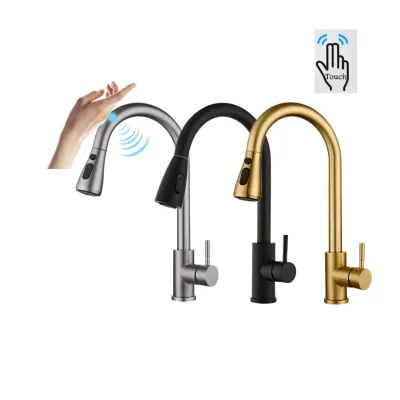
Quality control should extend beyond the final product inspection. Buyers should request information on the "Surface Treatment" processes, such as brushing or chrome plating, to ensure they meet the required standards for corrosion resistance and aesthetic consistency. The "Feature" of "Sense Faucets" suggests the inclusion of touchless or sensor technology in some models, which requires rigorous testing to ensure reliability and battery life.
For long-term procurement, the availability of spare parts is a critical consideration. The "After-sale Service" listing "Free spare parts" is a significant advantage, reducing the total cost of ownership. Buyers should establish a clear agreement regarding the lead time for spare parts and the process for claiming warranty services. Additionally, the "Project Solution Capability" implies that the supplier can support large-scale rollouts, which is essential for chains of hotels or office complexes.
In conclusion, sourcing pull-down sprayer kitchen faucets requires a balanced approach that considers technical specifications, regulatory compliance, cost efficiency, and supplier reliability. By focusing on verified certifications, understanding the nuances of material and design, and establishing robust quality control measures, buyers can secure high-quality products that meet the demands of both residential and commercial markets. The wide range of observed options, from single-handle modern designs to heavy-duty commercial fixtures, provides ample opportunity to find the right solution for specific procurement needs.
FAQs
What certifications do pull down sprayer kitchen faucets have?
High-confidence facts confirm Watermark, WELS, CE, ACS, BSCI, KTW, and ISO9001 certifications are available. Buyers must verify specific certificates for model numbers like HD30856 or FF6363B rather than assuming all units carry every mark.
Which materials are used for the faucet body?
Observed products utilize 304 Stainless Steel or Brass for the body construction. Stainless steel models often feature a brushed finish, while brass variants may have a chrome finish depending on the specific design style.
How many holes are required for installation?
The product attributes indicate a Single Hole installation type is standard for these units. This design simplifies retrofitting in residential kitchens while remaining suitable for deck-mounted commercial applications in hotels and offices.
What is the minimum order quantity for these faucets?
The observed MOQ range spans from 1 piece to 300 pieces depending on the supplier. Lower quantities often cater to samples or small retailers, while bulk orders near 300 pieces may benefit from reduced unit costs.
Can I get free spare parts with the warranty?
Yes, after-sale services include free spare parts alongside online technical support for many models. Warranty periods vary between 1 year and 3 years, with longer terms indicating higher manufacturer confidence in ceramic cartridge durability.
Where are these faucets manufactured?
The place of origin is listed as Guangdong, China, and Fujian, China. These regions are established hubs for sanitary ware production with advanced manufacturing infrastructure and supply chain integration for ODM and OEM services.